
When the Answer Isn't the Answer Part 2: The Long Road to a Diagnosis
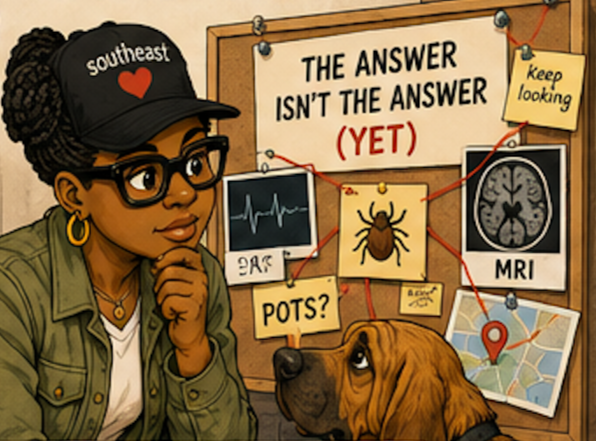
At the end of Part 1, I left George Washington University Hospital believing I finally had an answer.
The doctors diagnosed me with Migraine with Brainstem Aura (MBA)—a rare form of migraine that can mimic a stroke.
Considering everything that had happened, I was relieved.
It was scary, but at least it had a name.
Or so I thought.
The problem was...I didn't feel like someone who had simply recovered from a migraine.
Something still wasn't right.
I was exhausted.
Walking any distance left me feeling terrible.
My heart would race for no apparent reason.
I still had dizziness.
The brain fog lingered.
I didn't feel like myself.
If anything, I felt like someone had unplugged my body and plugged it back in incorrectly.
So began the next chapter of this journey.
When I was discharged from the hospital, the instructions were pretty straightforward.
Follow up with my primary care physician.
Then make an appointment with a neurologist.
So that's exactly what I did.
I called my doctor's office to schedule a follow-up appointment.
That's when I learned something that still makes me laugh.
My doctor was a neurologist.
Yes...really.
I've been going to this practice for at least 10 damn years, and because I always saw the physician assistant (who, by the way, is absolutely amazing), I had somehow never actually met the neurologist who owned the practice.
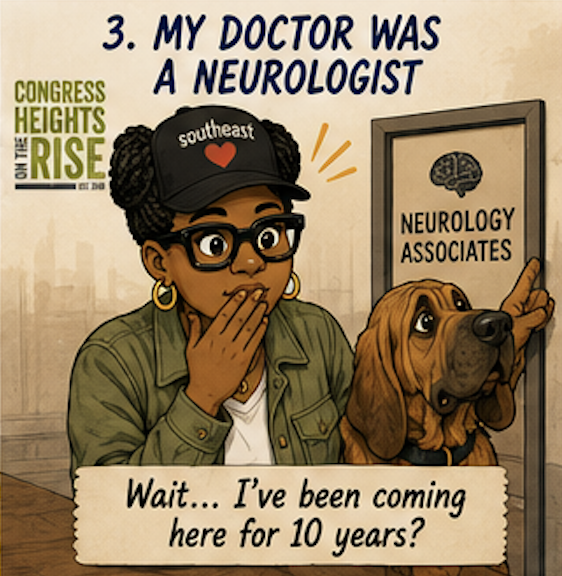
Apparently, I'd been seeing a neurology practice all along.
Talk about a plot twist.
Looking back, it actually made life a lot easier.
Instead of having to find a neurologist, wait months for a new patient appointment and transfer all of my records, I was already exactly where I needed to be.
My PA knew my history, and the neurologist could immediately begin reviewing everything that had happened at George Washington University Hospital.
That was one less hurdle at a time when I had more than enough to deal with.
Over the next several weeks, appointments turned into more appointments.
Questions led to more questions.
Every answer seemed to create two new mysteries.
One thing my neurologist quickly recognized was that many of my symptoms didn't quite fit the Migraine with Brainstem Aura diagnosis.
The more we talked, the more it became clear that we needed to keep looking.
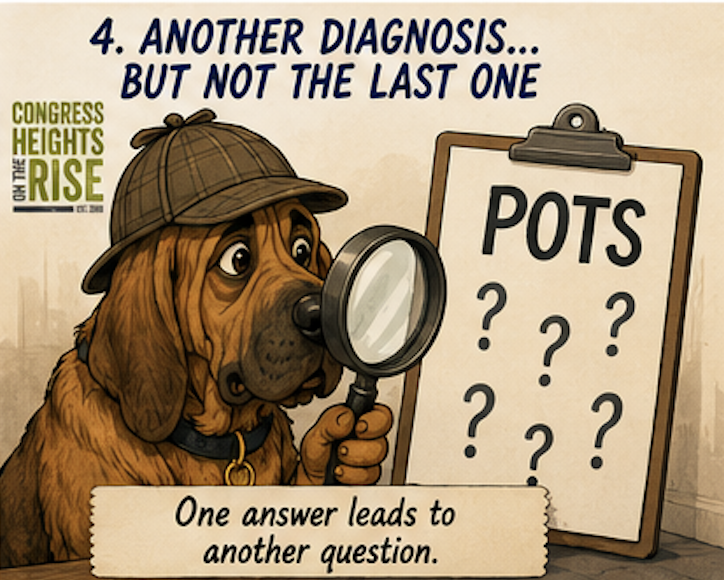
One of the first discoveries was that I had Postural Orthostatic Tachycardia Syndrome (POTS).
If you've never heard of POTS, you're not alone. I hadn't either.
POTS is a disorder of the autonomic nervous system—the part of your body that controls things you don't consciously think about, like heart rate, blood pressure and circulation.
For many people with POTS, standing up causes their heart rate to increase dramatically because the body struggles to regulate blood flow.
The symptoms sounded awfully familiar:
Dizziness
Lightheadedness
Brain fog
Fatigue
Racing heart
Weakness
Exercise intolerance
Nausea
Feeling faint
As I read through the list, I thought...
"Well...that explains a lot."
Except it didn't explain why I had POTS.
POTS is often secondary to something else.
My neurologist wasn't satisfied with treating the symptoms.
He wanted to know what caused them.
That question would change everything.
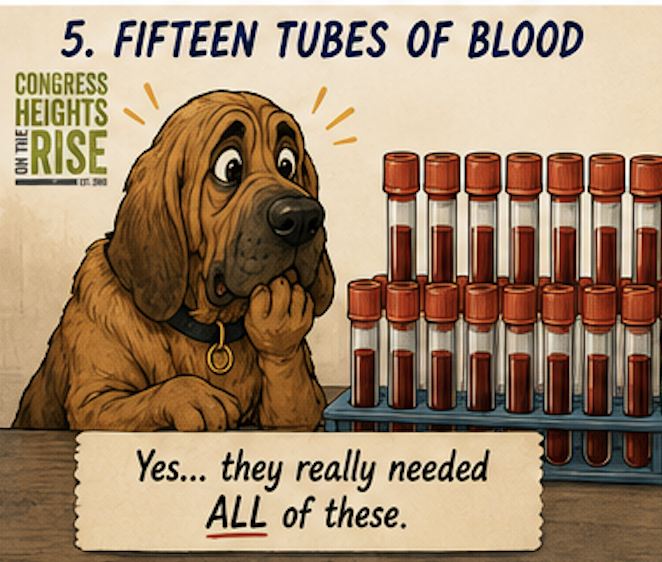
So he ordered bloodwork.
Not one tube.
Not five.
Fifteen.
Yes...
Fifteen big tubes of blood.
When the phlebotomist started lining them up, I remember thinking they were preparing me for a vampire convention.
Surely they couldn't need that much blood.
Apparently...
They could.
Those fifteen tubes were testing for autoimmune diseases, inflammatory conditions, infections and a long list of other possibilities.
Then came the waiting.
Waiting is one of the hardest parts of any medical journey.
Every notification on your phone makes your heart race.
Every lab result posted to your patient portal makes you wonder if this is finally the answer.
Then my neurologist called.
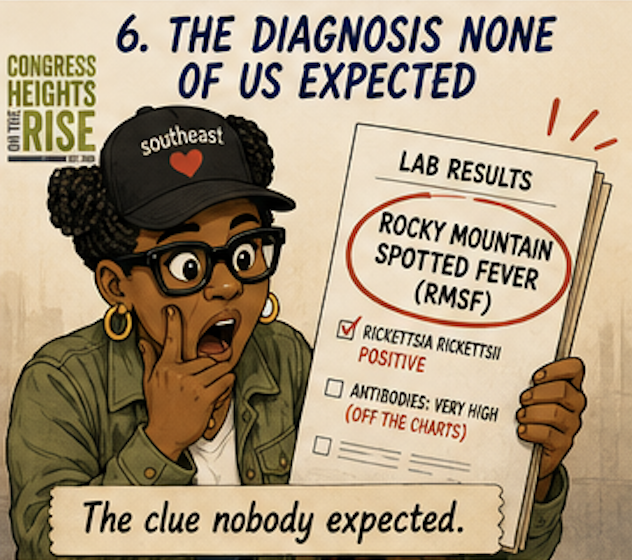
The tests showed I had Rocky Mountain Spotted Fever (RMSF).
Not just positive.
My neurologist told me the results were essentially off the charts.
His best estimate?
I'd probably been living with it for about two years.
Two years.
I remember just sitting there thinking...
"How is that even possible?"
Rocky Mountain Spotted Fever is a serious bacterial disease caused by Rickettsia rickettsii. It is spread through the bite of an infected tick and, if left untreated, can become life-threatening.
Despite the name, Rocky Mountain Spotted Fever isn't just found in the Rocky Mountains.
In fact, it's endemic throughout much of the Mid-Atlantic, including Maryland and Virginia, where cases are reported every year.
The symptoms can include:
Fever
Severe headache
Muscle aches
Nausea and vomiting
Fatigue
Loss of appetite
Rash (although not everyone gets one)
Confusion
Neurological symptoms in more severe cases
Looking back...
It was almost like reading a description of my own life.

Here's the crazy part.
I hate the outdoors.
Seriously.
Camping?
No thanks.
Hiking?
Hard pass.
My happy place has always been indoors with air conditioning.
So naturally my first question was...
"How in the world did I get a tick-borne illness?"
The honest answer is...
I have no idea.
My best guess?
Dog sitting.
I absolutely love watching dogs.
Over the years I've cared for dozens of them.
At one point I had five dogs sleeping in my bed.
Many of those pups loved parks, trails and grassy areas a whole lot more than I ever did.
Ticks don't care whether they arrive directly from the woods or hitch a ride home on a furry friend.
I'll probably never know exactly where I picked it up.
One thing I do know...
I'M NOT CONTAGIOUS.
Rocky Mountain Spotted Fever is spread through infected ticks—not from person to person.
You can't catch it from hugging me, shaking my hand or spending time with me.
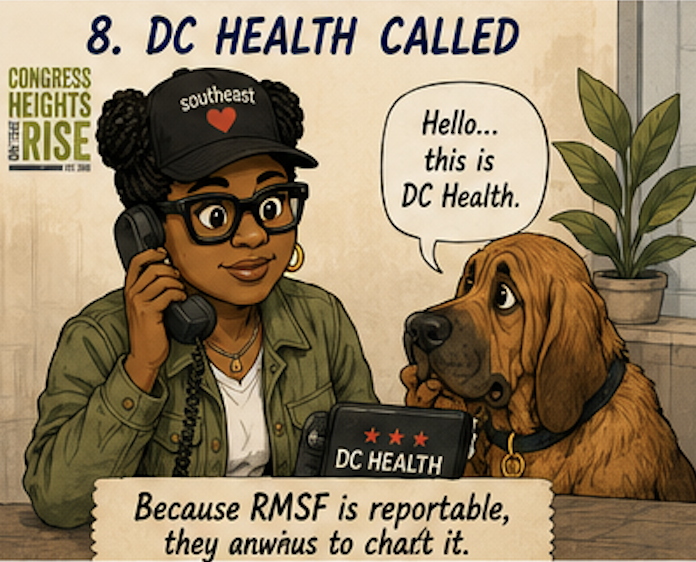
A few weeks ago, I received a phone call I wasn't expecting.
DC Health.
Because Rocky Mountain Spotted Fever is a reportable infectious disease, my healthcare providers were legally required to notify public health officials.
The representative wanted to know where I thought I had been exposed, whether I had traveled recently and how I was doing.
Unfortunately...
I couldn't tell them much.
I honestly don't know where I got it.
That uncertainty is one of the strangest parts of this entire journey.
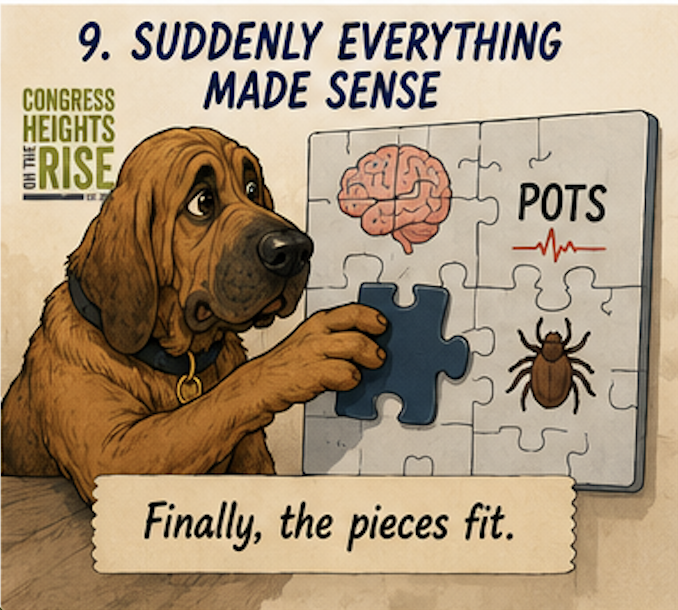
As shocking as the diagnosis was, pieces of the puzzle finally started fitting together.
The POTS suddenly had a likely explanation.
Many of the symptoms I'd been living with for months—and perhaps years—finally had an explanation.
But another thought immediately followed.
If I'd probably had this infection for two years...
How much damage had it already done?
Fortunately, we finally knew what we were fighting.
Unlike Migraine with Brainstem Aura, Rocky Mountain Spotted Fever has a specific treatment.
After weeks of uncertainty...
We finally had the right diagnosis.
I started what will become a four-month course of doxycycline (100mg twice a day). I’m three weeks in, and I absolutely hate the side effects!
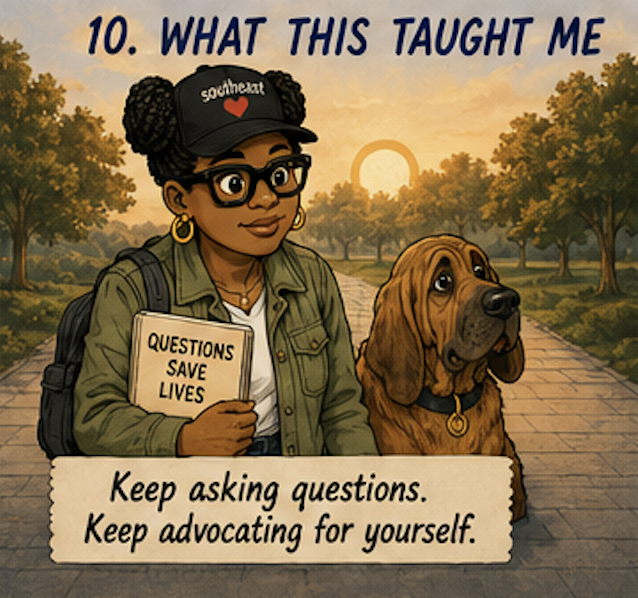
One of the biggest lessons from this experience is that the first diagnosis isn't always the final diagnosis.
Medicine is often a process of elimination.
Doctors work with the information they have at the time.
Sometimes they're right immediately.
Sometimes new information changes everything.
That's why follow-up appointments matter.
That's why asking questions matter.
That's why advocating for yourself matters.
And that's why you shouldn't ignore your instincts if something still doesn't feel right.
You know your body better than anyone else.
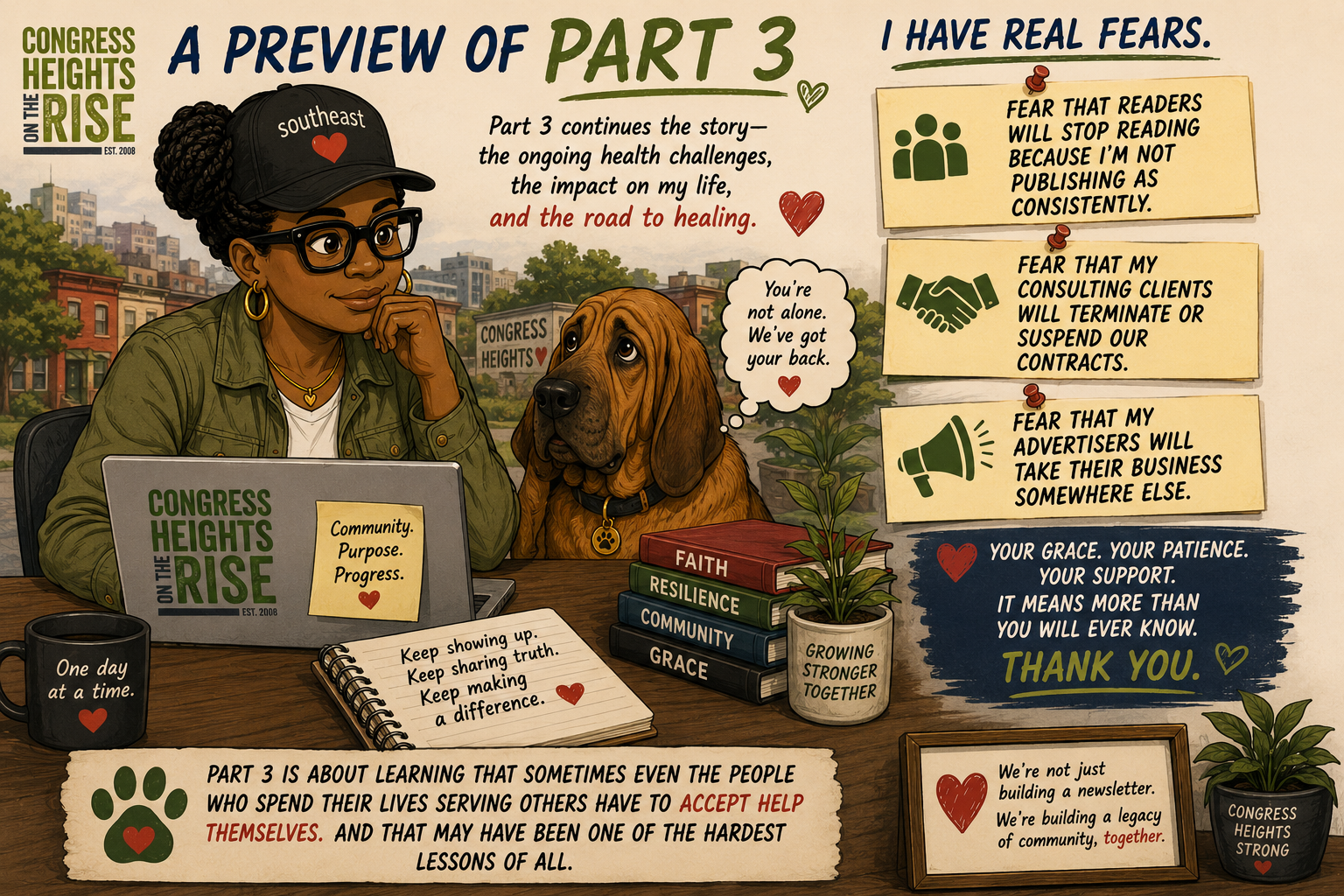
A Preview of Part 3
If you think Part 2 is where the story finally settles down...I hate to disappoint you.
Finding out I had Rocky Mountain Spotted Fever answered one big question, but it also marked the beginning of a completely different chapter.
In Part 3, I'll share how my diagnosis led to ongoing neurological complications, seizures, months of treatment, and learning to live with POTS. I'll also talk about how a disease I likely carried for nearly two years changed almost every aspect of my life—including Congress Heights on the Rise.
Many of you noticed there were days when the daily newsletter was delayed, abbreviated, or didn't arrive at all. There were times when I simply couldn't write because of brain fog, exhaustion, seizures, or doctor's appointments. On a few occasions, friends had to step in behind the scenes just to help keep CHoTR going.
For someone who has published CHoTR almost every single day since 2008, that was incredibly difficult to accept. This publication has always been more than a blog to me—it's a commitment to our community.
I'll also be honest about something I haven't talked much about: the fear.
I worry that readers will stop coming back because I'm not publishing as consistently as I once did. I worry that my consulting clients will decide I'm no longer reliable and terminate or suspend our contracts. I worry that advertisers who help keep Congress Heights on the Rise going will take their business elsewhere because they don't know what's happening behind the scenes.
Those fears are real.
When your livelihood depends on your ability to think clearly, write, meet deadlines, and show up every day, a neurological illness doesn't just affect your health—it affects your confidence, your finances, and your sense of purpose.

But I've also learned something important.
The communities I've spent nearly two decades serving have shown me incredible grace. Friends have stepped in when I couldn't. Readers have checked on me. Clients have been understanding. And every encouraging email, text message, and social media comment has reminded me why I keep fighting to get better.
Part 3 is about learning that sometimes even the people who spend their lives serving others have to accept help themselves.
And, as it turns out, that may have been one of the hardest lessons of all.