
Why I Don't Include East of the River Condos in CHotR's Real Estate Listings
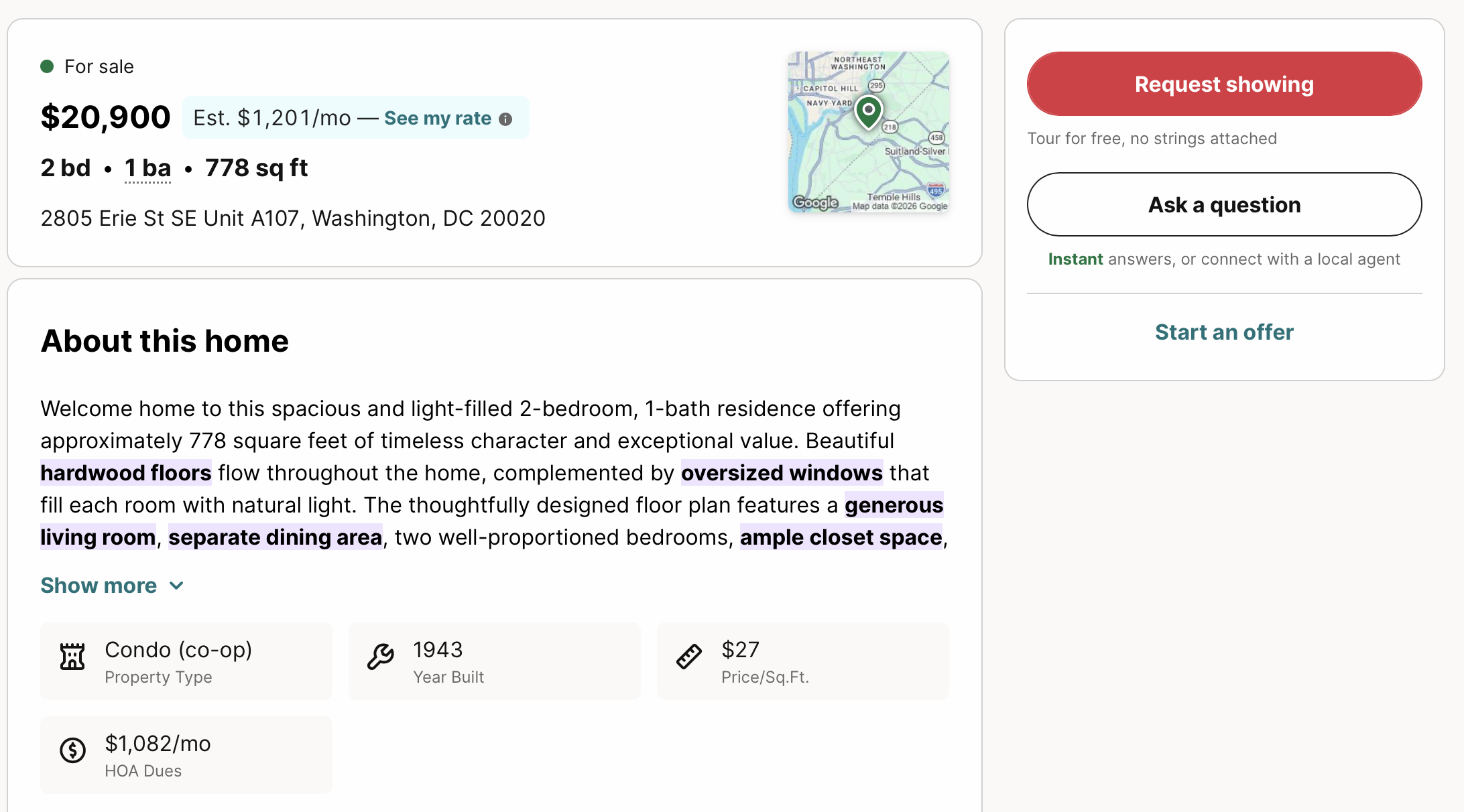
Some of you may have noticed that when I share real estate listings on Congress Heights on the Rise (CHotR), I generally don't include condominiums east of the river. There's a reason for that, and it's something I've been talking about for years.
I simply don't believe the overwhelming majority of these condos are good financial investments.
Years ago, I raised concerns about where I believed the condo market east of the river was heading. Unfortunately, many of the issues I warned about are exactly what we're seeing today.
Here are some of my biggest concerns:
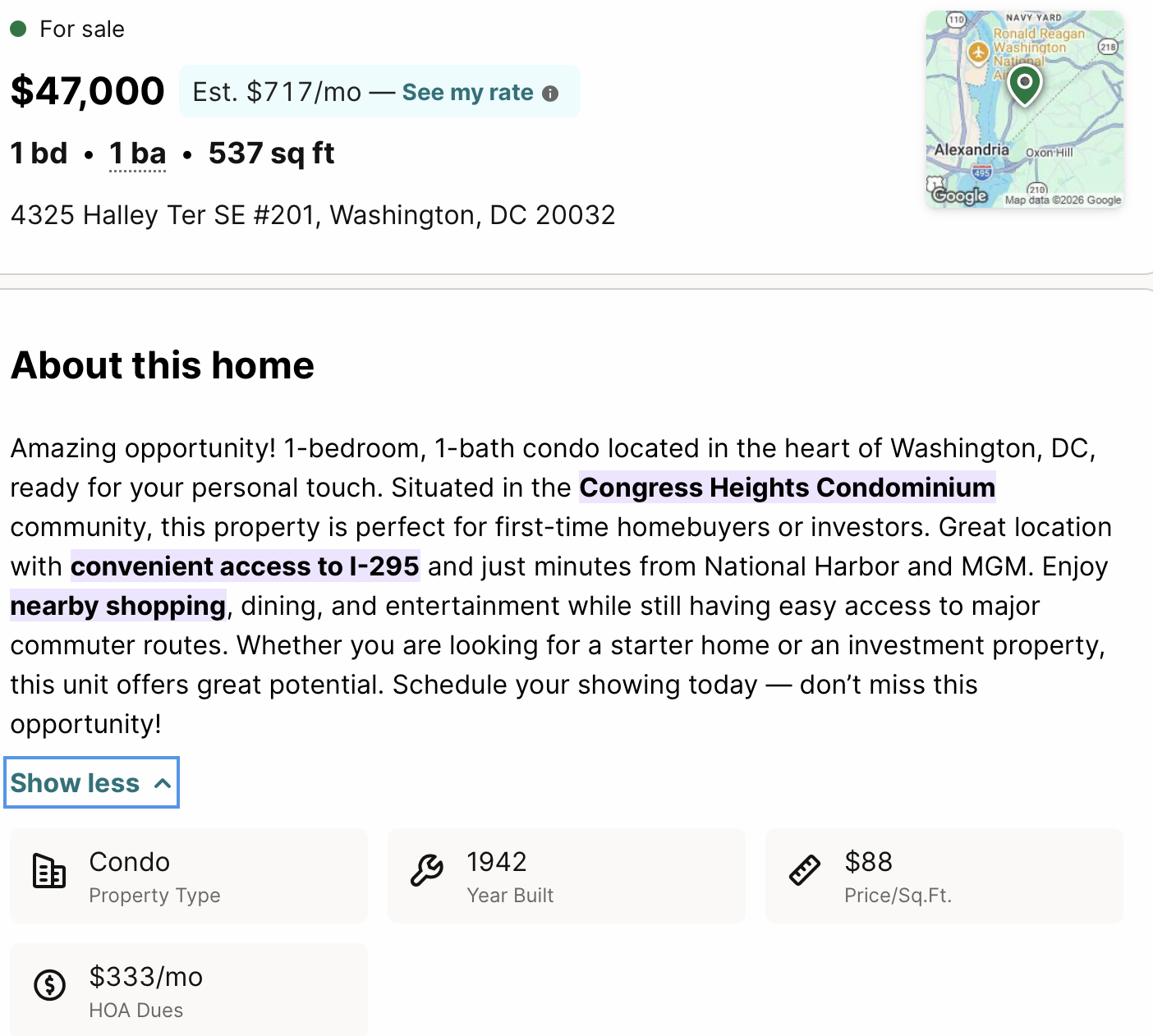
Low owner-occupancy rates: Some condominium associations have relatively few owner-occupied units, with a significant percentage being investor-owned or rental properties. That can create challenges with financing, property maintenance, and the overall stability of the association.
Delinquent condo fees: When too many owners fall behind on their association dues, it can put enormous financial pressure on the entire building. Deferred maintenance, increased fees, special assessments, and declining property conditions can follow.
Limited financing options: Some condo buildings have become difficult or impossible to finance through traditional mortgage lenders because of issues with the condominium association. That leaves potential buyers with cash-only options, significantly shrinking the pool of buyers and making resale more difficult.
Declining property values: Unlike what many people expect when purchasing real estate, some of these condos have lost substantial value over time. And when you're dealing with a property that's difficult to finance or sell, that creates another layer of financial risk.
Here's a personal example.
I owned a condominium east of the river that I sold in 2019. That same unit is currently listed for nearly $100,000 LESS than what I sold it for seven years ago.
Let that sink in.
I have said before that I would never purchase another condominium. My condo served its purpose as my first step into homeownership, and I'm grateful for that experience. But it also taught me some valuable lessons about real estate, condominium associations, and the importance of looking beyond the purchase price.
And I want to be clear about something else. I really hate having to say any of this.
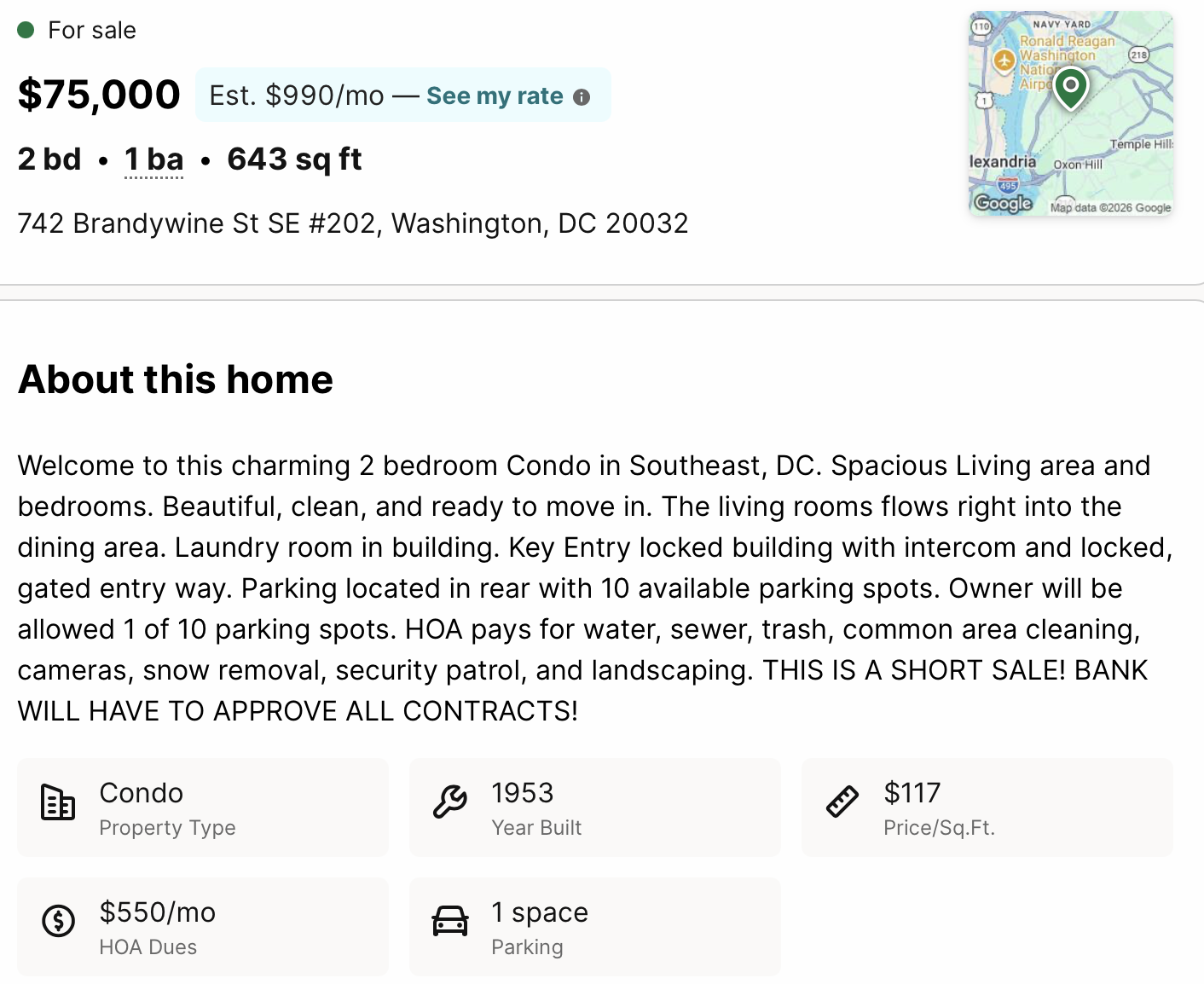
I'm sure there are people reading this right now who own condos east of the river, including some who may be actively trying to sell their properties. The last thing I want to do is discourage those homeowners or scare away potential buyers. I know how much purchasing a home means to people, particularly those who worked hard to become first-time homeowners.
I also know that for many people, condominiums represent one of the few relatively affordable paths to homeownership in DC.
But I think it's time we have a realistic conversation about this market and what buyers and sellers can reasonably expect.
Not what we hope our properties will be worth. Not what we paid for them. Not what we believe they should be worth. But what the market is actually telling us.
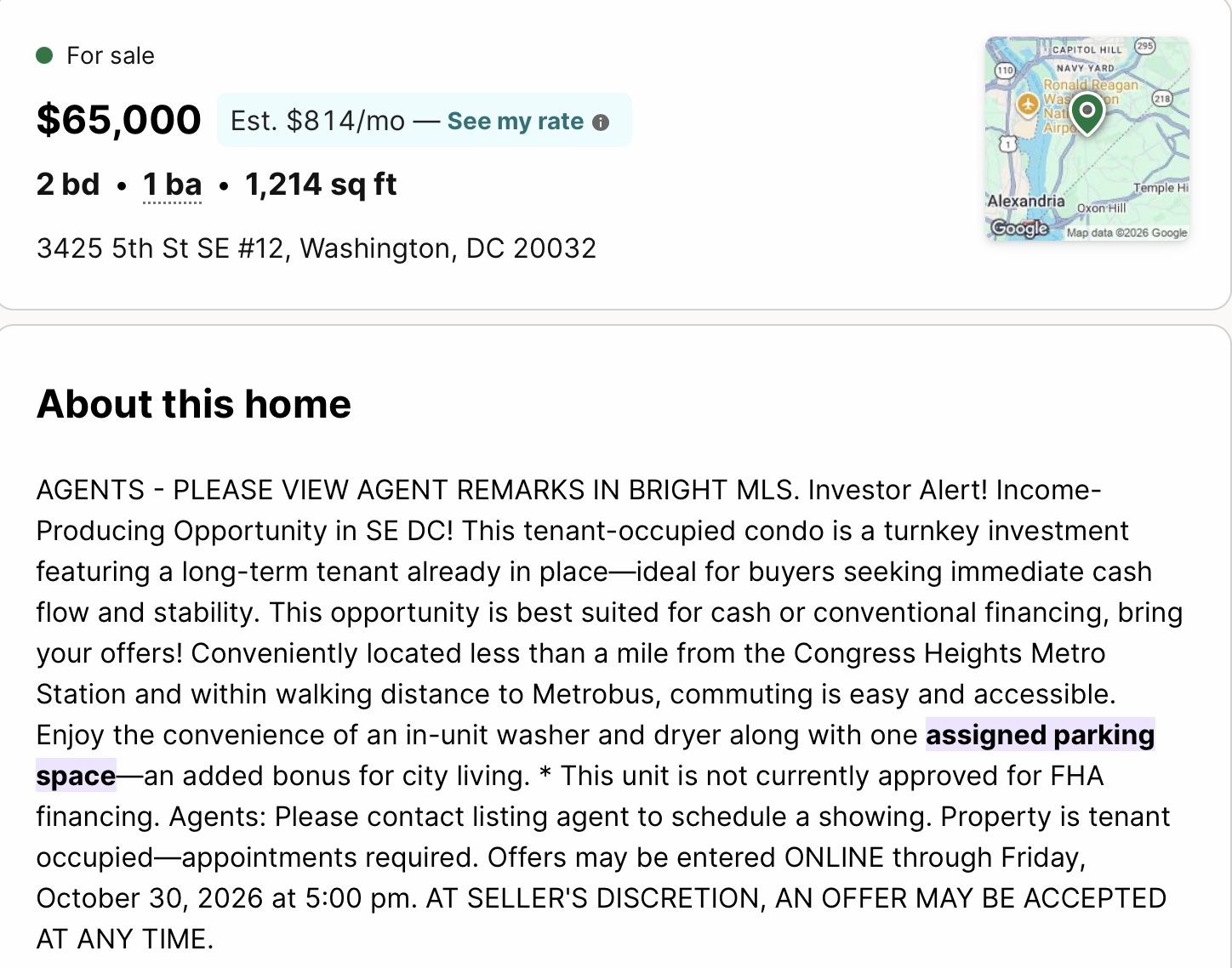
If a building has significant financial problems, high delinquency rates, limited owner occupancy, or restrictions that prevent buyers from obtaining traditional mortgages, those are serious issues that directly affect property values and resale opportunities.
Ignoring those realities doesn't help current owners, and it certainly doesn't help prospective buyers.
To be clear, I'm not saying every condo east of the river is a bad investment. There are exceptions. But I believe buyers need to be extremely cautious, particularly when it comes to reviewing an association's financial health, delinquency rates, owner-occupancy percentages, reserves, and whether the building qualifies for conventional financing.
Just because a property is affordable to purchase doesn't necessarily mean it's a good investment.
CHotR has always been about sharing information that helps residents make informed decisions. I don't feel comfortable routinely promoting properties that I personally believe may present significant financial risks to prospective buyers.
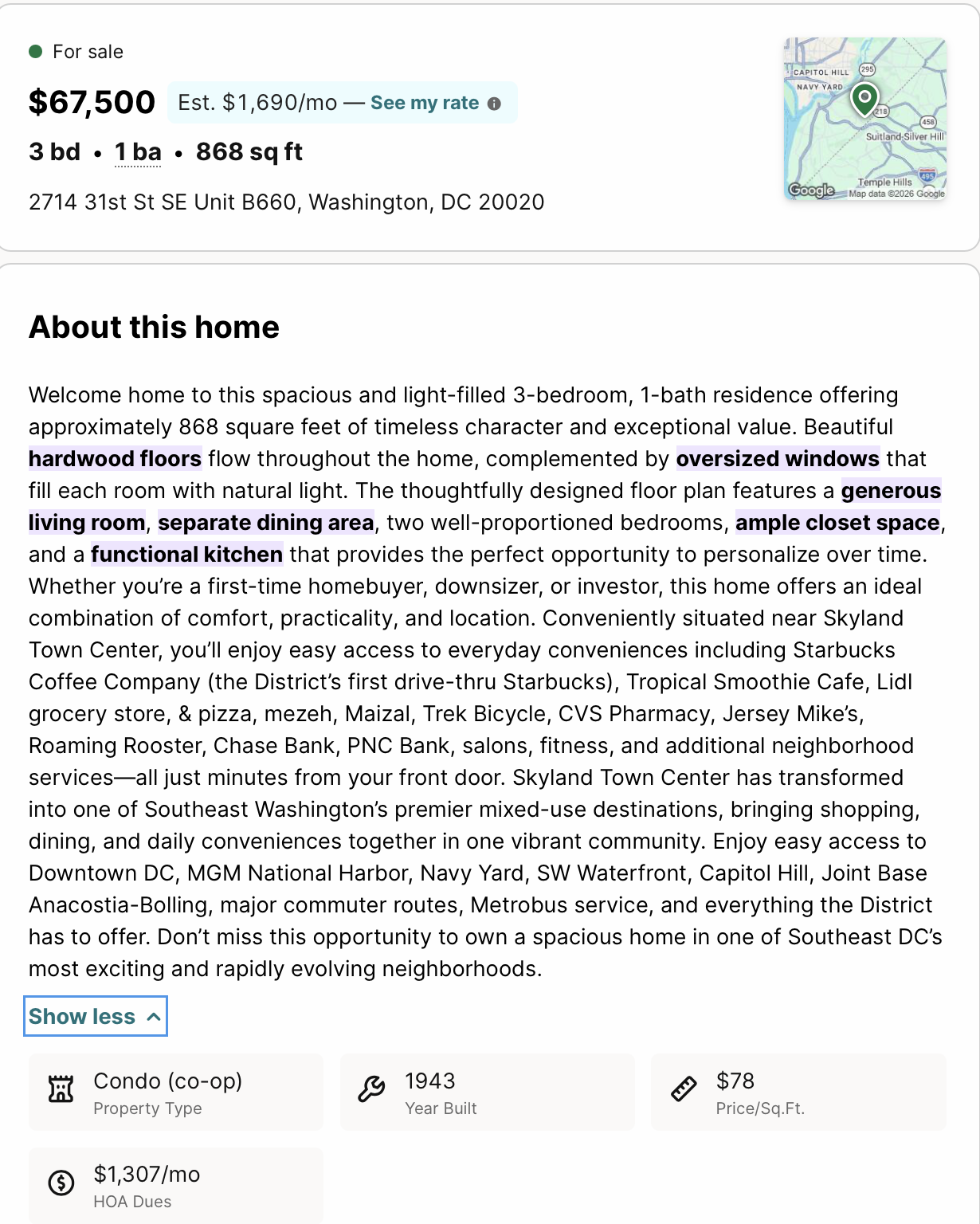
That's why you'll generally see me sharing single-family homes and other residential real estate opportunities rather than condominium listings.
And for anyone considering purchasing a condo east of the river, my advice is simple: Do your homework. Then do some more.
Ask questions. Review the association's financial statements. Find out how many owners are behind on their fees. Understand the financing restrictions. And most importantly, think about what happens when it's time for YOU to sell.
Homeownership should be an opportunity to build financial stability and equity, not leave you trapped in a property you can't easily sell.
I'd love to hear from current and former condo owners east of the river. What has your experience been? Have you seen your property appreciate, hold its value, or decline?
And if you're currently trying to sell, what challenges are you facing?
I think this is a conversation we need to have, even if it's an uncomfortable one. Because being realistic about the market isn't about discouraging homeownership east of the river. It's about making sure people understand what they're getting into and protecting the financial investments they've worked so hard to make.