
Black Women Showed Up Again. But Will America Show Up for Us?
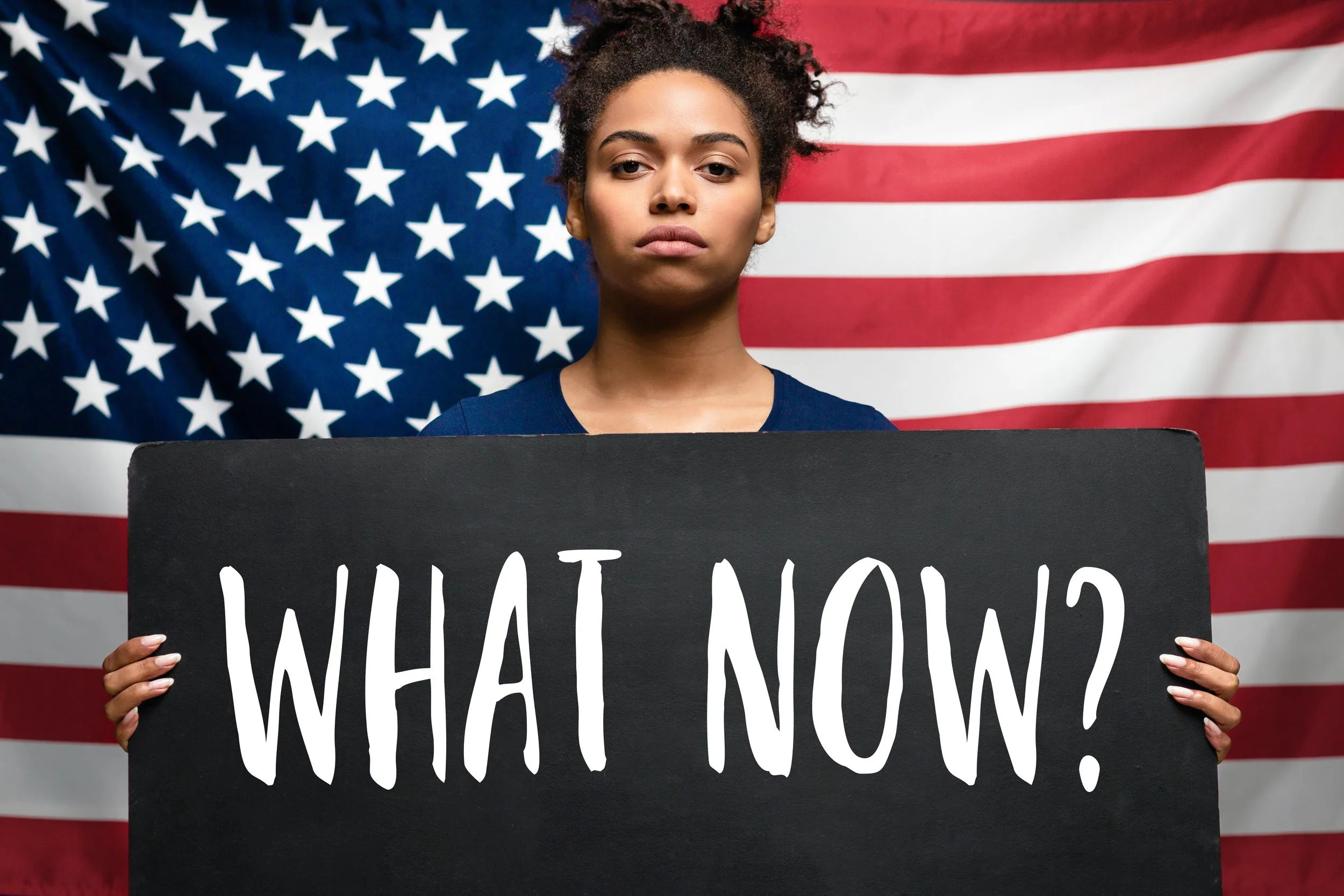
I have a confession to make.
I almost didn't vote in the 2026 midterm elections.
For someone who has spent much of her adult life advocating for communities, encouraging civic engagement, and reminding people that their voices matter, that's not an easy thing to admit.
But it's the truth.
After the 2024 presidential election, I was exhausted. Disillusioned. Disappointed. And frankly, I wasn't sure I had it in me to put my faith in the political process again.
And I know I'm not the only Black woman who felt that way.
For years, Black women have been among the most reliable and engaged voters in American politics. We've organized, volunteered, donated, knocked on doors, encouraged our families and neighbors to vote, and carried the weight of expectations that somehow, once again, we would help save the day.
And after the last presidential election, many of us were left asking: When is someone going to show up for us?
The Weight of the Last Election
The disappointment of 2024 wasn't simply about a candidate losing an election.
For me, it was about what that election represented.
It was about watching Black women invest their time, energy, hope, and emotional labor into a political process, only to find ourselves facing another outcome that left us questioning how much our contributions truly mattered.
There was anger. There was sadness. And there was a sense of betrayal that I think is difficult to explain unless you've experienced it.
I didn't want to feel that way again.
I didn't want to get excited about another election, follow every poll, watch every result come in, and allow myself to believe that things might change, only to wake up the next morning feeling defeated.
So when the midterms approached, I found myself considering something I never thought I would seriously contemplate.
Sitting this one out.
The Disappointment Goes Far Beyond Politics
But here's something else I've been thinking about lately.
For many Black women, the disappointment and disillusionment we experience in politics aren't isolated feelings. They're familiar emotions that follow us into other parts of our lives.
We feel them in our workplaces, where our ideas and contributions may be welcomed until we speak up about something uncomfortable.
We feel them in the communities and buildings where we live, where we want to feel connected and valued but sometimes find ourselves navigating exclusion, dismissiveness, or the feeling that our voices don't carry the same weight as others.
We even feel them in the organizations where we volunteer our time, energy, and expertise because we genuinely believe in their missions.
Think about that. Even in spaces where we're giving something of ourselves freely, we can still find ourselves feeling unheard, unappreciated, or silenced.
And sometimes the silencing doesn't come from someone explicitly telling us to be quiet.
Sometimes it comes from the subtle pressure to keep the peace, to avoid being labeled difficult, angry, or confrontational.
Sometimes it comes from the very human desire to belong.
We want to be included. We want to be accepted. We want to feel that the spaces where we work, live, and volunteer are also spaces where we matter.
And sometimes, in pursuit of that belonging, we make ourselves smaller. We bite our tongues. We choose our battles. We convince ourselves that speaking up isn't worth the consequences.
That's a trap.
And I think many Black women recognize it, even if we don't always talk about it.
We become the dependable ones. The problem solvers. The people who show up, get things done, and hold things together. But when we need support, understanding, or simply the freedom to express our disappointment, that same generosity isn't always returned.
Sound familiar?
It's not unlike the relationship many of us have developed with politics.
We're valued for what we contribute, but are we equally valued for who we are?
And at what point do we stop accepting the idea that belonging requires our silence?
And Then Came the Midterms
The 2026 midterms have brought renewed attention to the power of voters, grassroots organizing, and the role Black communities continue to play in shaping American politics.
And once again, Black women are part of that story.
I believe Black voters, particularly Black women, deserve recognition for the organizing, engagement, and commitment they bring to elections. But I also believe we need to be careful about reducing every election outcome to the idea that Black women somehow rescued America.
Because that narrative comes with a burden.
It suggests that no matter how exhausted, frustrated, or disappointed we become, we're still expected to pick ourselves up, put on our capes, and save everyone else.
Well, I'm tired of the cape.
I'm tired of the expectation that Black women must always be the adults in the room, the organizers, the motivators, the dependable voters, and the people who somehow keep believing when everyone else has given up.
We are allowed to be disappointed.
We are allowed to be angry.
We are allowed to speak up without worrying that doing so will cost us our place at the table.
And we are certainly allowed to ask what we're getting in return for our loyalty and our labor.
So What Happens Next?
That's the question I keep coming back to.
Elections are important, but they're not the finish line. They're the beginning of another round of accountability.
What happens after the celebrations end? After the speeches are delivered? After the campaign volunteers go home and the elected officials settle into their offices?
Will the communities that helped shape these elections see meaningful improvements in their daily lives?
Will Black women be heard when we're talking about affordable housing, healthcare, economic opportunity, public safety, education, and the challenges facing our families and neighborhoods?
Will our concerns be priorities, or will we once again be thanked for showing up and then expected to wait patiently for change?
As someone who has spent years advocating for communities East of the Anacostia River in Washington, DC, I know that political promises don't always translate into meaningful progress on the ground.
And that's what concerns me.
I don't need another campaign slogan.
I need to see results.
But I also think we need to broaden the conversation beyond elected officials.
We need to examine the cultures of our workplaces, our neighborhoods, our community organizations, and even our personal relationships.
Are we creating spaces where Black women can disagree without being dismissed? Where we can set boundaries without being punished? Where our contributions are appreciated without the expectation that we will always sacrifice ourselves for the greater good?
Because the desire to belong should never require us to surrender our voices.
Hopeful, But Guarded
I wish I could say that the midterms have completely restored my faith in the political process.
They haven't.
But they have reminded me that people are still engaged, still paying attention, and still willing to make their voices heard.
And maybe that's where hope begins again.
Not with blind faith in a candidate or a political party, but with the understanding that our participation matters and that elected officials should be held accountable long after Election Day.
I'm still disappointed by what happened in 2024. I'm still carrying some of that frustration. And I'm still trying to figure out how much emotional energy I'm willing to invest in politics moving forward.
But I'm also thinking about how much energy I've invested in other spaces where I've wanted to belong, to contribute, and to make a difference.
And I'm asking myself whether I've always received the same respect, consideration, and support that I've been willing to give.
That's not an easy question to answer.
But maybe it's one more of us should be asking.
I did vote.
And now I'm watching.
Not just to see who wins, but to see what happens next.
Because Black women deserve more than recognition for showing up.
We deserve to be heard when we speak. We deserve to be valued when we contribute. We deserve to belong without having to make ourselves smaller.
And we deserve to stop being made to feel that our only value is in what we can do for everyone else.
How Are You Feeling?
I'm genuinely curious how other Black women are processing this moment.
Are you excited about the midterms? Hopeful? Relieved? Or are you still skeptical?
Did the disappointment of the 2024 presidential election make you question whether you wanted to vote again?
And beyond politics, have you experienced that same sense of disappointment or disillusionment in your workplace, where you live, or in organizations where you've volunteered your time?
Have you ever found yourself staying silent because you didn't want to risk losing your sense of belonging?
And perhaps most importantly, what would it take for you to feel truly heard, valued, and supported?
I'd genuinely like to hear from you.
Because I suspect I'm not the only Black woman trying to balance hope with exhaustion, the desire to belong with the need to speak up, and the possibility of change with the fear of being disappointed again.
Clarify the midterm election timeline and how you felt about going through it. Your own struggle, if you had one, and when. Balancing frustration with hope, with the fear of being left behind or pushed to the front to take the rocks of fear and retribution
What happens next?.